Guitar Pedal Research
Pedal Manufacturers:
BOSS Pedals
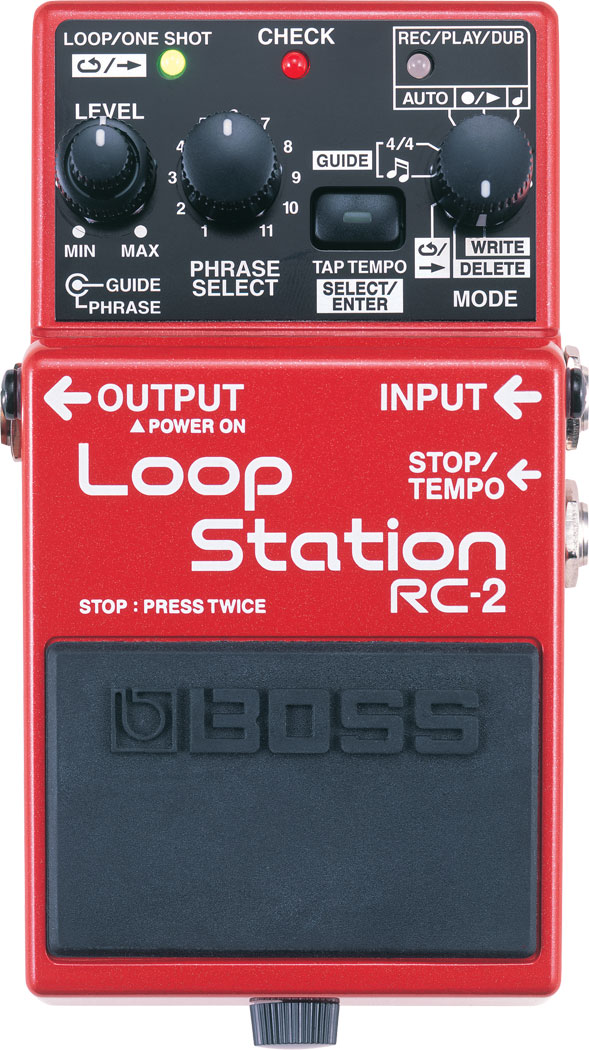
I personally own the RC-2 loop pedal, which I love! I love using it because it offers me the ability to overdub and add percussion to my guitar playing, if I don’t have a friend to play with. Musically, I love working in layers to try out different ideas, so the loop pedal is a perfect way to practice and perform different arrangements. BOSS makes many different variations of the loop pedal, and seems to be the most popular manufacturer for this particular type of pedal, and for most different types of guitar pedals. They make loop pedals, distortion pedals, pitch modulation pedals, reverb pedals, synth pedals, among many others. Their website claims that their “stompboxes,” meaning their famous single pedals, are the top-selling in the world. I love the look of their pedals, and their reliability. However, I would guess that because BOSS pedals are made in such mass quantities, that they are not handmade, and they likely aim for total consistency across their pedals, so they all sound the same. In this way, it could be difficult to achieve a truly unique sound from a large manufacturer. Given that it is such a large company, it might also be difficult to have the same level of customer specialization (custom guitar pedals) and service that a smaller boutique would have, giving the relationships that they can form directly with their customers.

Fulltone Pedals
Fulltone Pedals seem to specialize in overdrive distortion pedals, such as the OCD V2 and the Soulbender V2. Given their name, “Fulltone,” they specialize in tone pedals, rather than loop pedals and pitch modulation. While their products don’t have a very wide variety of functions, they do have competitive pricing and seem to have spent a lot of time perfecting the tone of their pedals. Additionally, unlike large manufacturers, they have a custom shop, where they sell new variations on their existing pedals in limited quantities. These items seem to rotate constantly, so that they always have new, different approaches to tone alteration. On the product descriptions for the custom items, the owner often writes a personal note about how he stumbled across certain parts and decided to try to make something new. He is often very specific about the actual electronics of the pedals, unlike some of the larger manufacturers that focus on the effects. From the about page, the owner, Michael Fuller, says he is focused on durability, and recreating the tone of vintage guitar pedals with consistency, longevity, and the best possible tone in mind (at the bottom of the page it says: “Specifications and features of Fulltone pedals are subject to change depending on what sounds best to my ears.“)


Effectivity Wonder Pedals
Effectivity Wonder Pedals is a small guitar-pedal manufacturing company based out of Barcelona, Spain. The unique look of these pedals immediately struck me, and I looked through their website to learn more. They create a wide variety of different types of pedals at a competitive price, including FX pedals, distortion pedals, and synthesizer pedals. All of their products are handmade. Many of their pedals seemed to be named and designed with different celebrities and characters in mind, including the “Winona Driver” distortion pedal and the “GhostBoosters” FX pedals. I love these unique designs. I also really like the idea of creating custom guitar pedals. They have executed some really cool, custom designs, and encourage customers to choose crazy images and tone effects to make something brand new. This customization is a feature that many other guitar pedal manufacturers and distributors do not offer. However, I wish I had more of sense of what these pedals are going to actually sound like when looking online. They do not have any demonstration videos on their website, and they do not say what is going on with the electronics of their pedals.


Differences in Approach:
In examining these different manufacturers, it seems like larger manufactures are focused on variety, consistency, and information resulting effects of their pedals, rather than the actual electronics. In this way, their products are very accessible, in that their customers don’t have to understand anything about electronics to be able to understand their products’ functions. However, their prices are very high in comparison to some of the smaller boutiques, and they do not provide the same level customization options, and personalization, which makes all of their pedals very standardized, and can make achieving something truly unique more difficult. Conversely, smaller boutiques offer lower prices, more customization, and generally more information regarding electronics. This can be really helpful for someone who knows exactly what they’re looking for and has a good understanding of electronics, but someone is maybe a little less experienced and looking for many different options would likely choose a larger manufacturer as a starting point. Overall, both of these types of approaches have their drawbacks and advantages, making a choice really depends on your budget and your understanding of what you’re looking for!
Unique Guitar Pedal:
One crazy guitar pedal I found is the Catalinbread CSIDMAN Glitch/Stutter Delay. It is essentially a slapback delay pedal with some randomizer that varies the lengths of each delay, and creates an interesting stutter effect.
This video demonstration shows how it works:
SP5T Switch
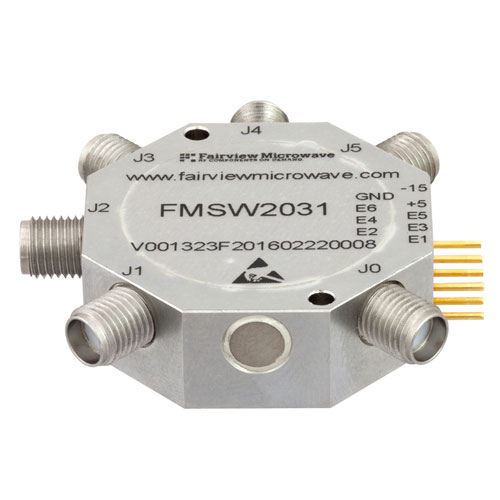
An SP5T switch looks like this:
Here is a diagram of how it works:

The name, SP5T, indicates that it is a single-pole, five-throw switch. The switch is a rotary switch, meaning that it is circular and can stop in different positions. In this case, the switch can stop in five different positions.
Momentary Button vs. Latching Button
A momentary button only remains compressed when someone is pushing the button, whereas a latching button is a button that compresses and decompresses with a button push. More simply, a latching button stays compressed with a push, and can be decompressed with another push, while a momentary button is only compressed when someone is pushing it, and when the person releases it, the button is decompressed. A momentary button can be used for playing a note on a synthesizer, as you want the notes to release when someone lets go. Conversely, you might use a latching button for a guitar pedal, to engage the effect, without having to keep pressing it. In this way, the latching button allows for a sustained effect, without having to keep pushing it. To remove the effect, it just has to be pushed again. Overall, latching buttons are the best option for guitar pedals and momentary buttons are the best option for synthesizers.
 Sarah's Analog Electronics Lab Reports